Will insoles help my back pain? How foot support affects your spine
Lower back pain rarely starts in just one place. In many cases, it develops gradually through small alignment problems that begin at the feet and travel upward through the knees, hips, and spine. When arches collapse slightly with each step or the heel rolls inward, the body compensates higher up the chain. Over time, those small compensations can place extra stress on the lower back.
Supportive insoles and correctly fitted footwear can help reduce that strain by improving alignment, stabilising movement, and supporting your posture from the ground up. For many people, that means less fatigue, easier walking, and fewer daily aches.
At Foot Solutions Plymouth, we help people across Plymouth and Cornwall understand whether foot mechanics may be contributing to back, hip, knee, or foot discomfort through gait analysis, pressure mapping, and personalised footwear guidance.
How your feet affect your lower back
Your feet are the foundation of movement. Every step begins with the way your foot contacts the ground and transfers force upward through the body.
If your foot overpronates (rolls inward excessively) or your arch collapses under load:
- The lower leg rotates inward
- Knee tracking changes
- The hips compensate to maintain balance
- Pelvic alignment shifts
- The lumbar spine absorbs additional stress
These changes are often subtle, but thousands of steps per day add up.
Three key factors explain why supportive insoles can help:
Arch support improves alignment
Structured arch support helps control excessive flattening of the foot, encouraging a more neutral walking pattern and reducing rotational stress higher up the body.
Heel stability limits unwanted movement
A deep heel cup and firm rearfoot support reduce rolling and twisting through the ankle, which can help stabilise the knees and hips.
Better load distribution reduces compensation
When pressure is spread more evenly across the foot, the body does not need to compensate as aggressively through the pelvis and lower back.
Will insoles help with back pain?
They can, particularly when back pain is linked to:
- Flat feet or fallen arches
- Overpronation
- Long periods standing on hard floors
- Uneven weight distribution
- Fatigue from poor footwear support
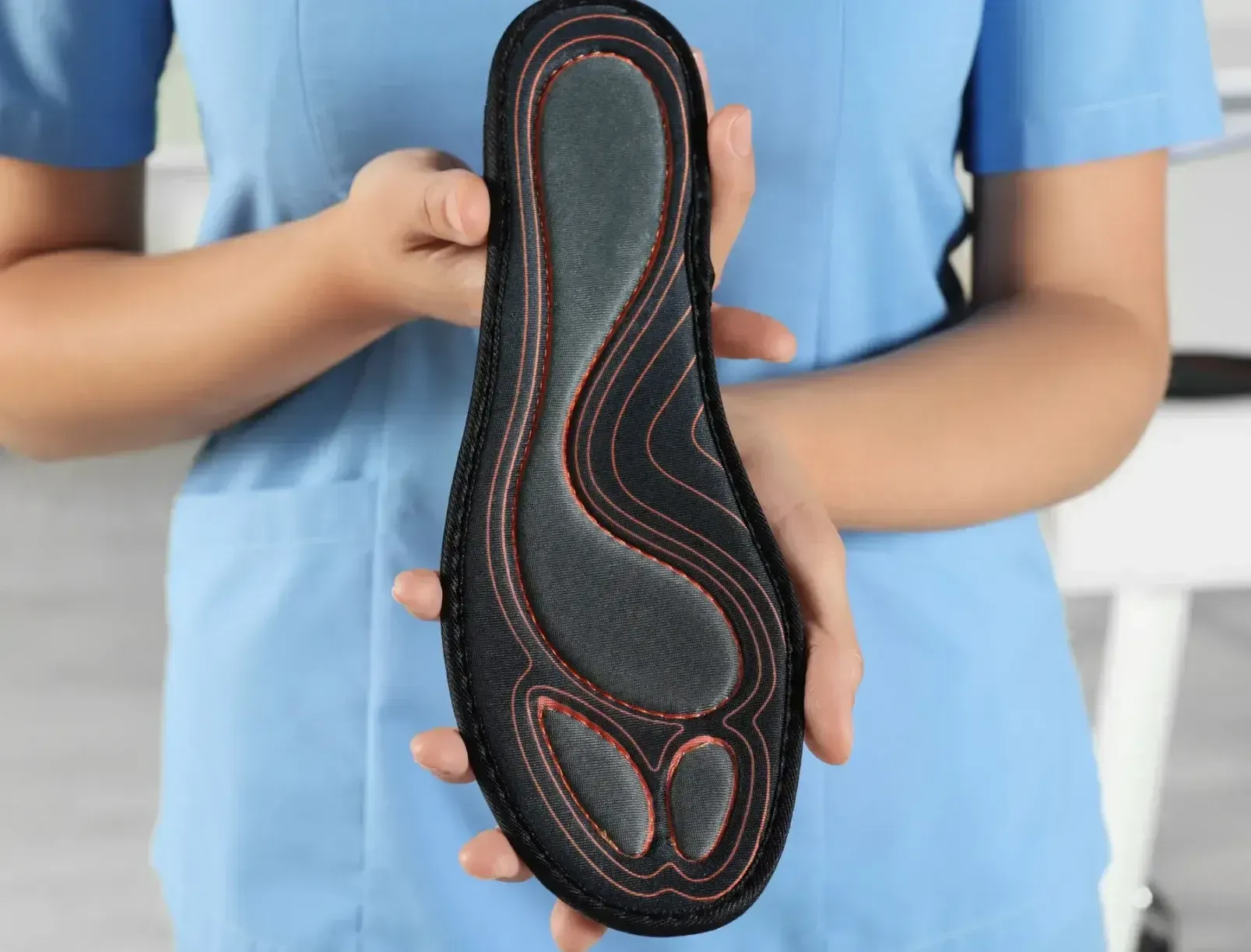
Soft cushioned inserts may improve comfort temporarily, but structured orthotic-style insoles generally provide more meaningful biomechanical support. Features such as a deep heel cup, firm arch support, and stabilising shell are designed to improve alignment rather than simply add padding.
At Foot Solutions Plymouth, we begin with a free foot and gait assessment that includes pressure analysis and 3D foot scanning. This helps identify whether foot posture or walking mechanics may be contributing to your symptoms.
If foot mechanics are part of the problem, properly fitted support can often reduce discomfort not only in the feet, but also in the knees, hips, and lower back.
What supportive footwear should include
Even the best insoles work poorly inside unstable shoes. Supportive footwear helps keep orthotics in the correct position and improves overall stability.
Look for shoes with:
- A deep heel cup
- A firm heel counter
- Removable insoles for orthotic compatibility
- A stable cushioned midsole
- Adequate depth and toe room
- Secure fastenings such as laces or straps
We help customers choose orthotic-friendly footwear suited to daily walking, work, casual use, or sport. You can explore supportive footwear options on our dedicated page for orthotic-friendly shoe recommendations in Plymouth.
When orthotics may help most
Orthotics and supportive insoles are often useful when:
- You experience tired or aching feet alongside back pain
- Your shoes wear unevenly
- Standing for long periods worsens symptoms
- You have flat feet or high arches
- You notice hip or knee discomfort alongside foot fatigue
Foot support is not a replacement for medical treatment where serious spinal or neurological issues exist, but it can be an important part of an overall management plan.
When to see a GP or physiotherapist
Seek medical advice promptly if you experience:
- Severe back pain after an injury
- Numbness or weakness
- Loss of bladder or bowel control
- Fever alongside back pain
- Difficulty walking or bearing weight
- Persistent or worsening symptoms
People with diabetes or circulation issues should also seek professional assessment for new foot symptoms.
Our role is to assess biomechanics and provide support where appropriate. If symptoms suggest a medical condition beyond footwear or gait mechanics, we will always recommend the correct clinical pathway.
What are the “big 3” for lower back pain?
Many clinicians focus on three core principles for managing lower back discomfort:
1. Movement and mobility
Gentle, regular movement helps reduce stiffness and supports circulation. Walking and controlled mobility work are often more beneficial than prolonged rest.
2. Strength and stability
Improving strength through the hips, glutes, and core helps distribute load more effectively and supports spinal posture.
3. Alignment and load management
Supportive footwear, orthotics, sensible pacing, and good posture help reduce cumulative strain during daily activity.
Foot support contributes directly to this third pillar by improving alignment from the ground up.
Can insoles help with hip pain too?
Often, yes.
When excessive foot rolling changes knee and hip alignment, strain can develop around the hips and pelvis. Structured insoles that improve heel stability and arch support can reduce rotational stress throughout the chain.
If pain feels deep within the hip joint, localises strongly to the groin, or follows trauma, a clinical assessment is important. Orthotics may still help as part of a broader treatment plan.
What is the worst thing you can do for back pain?
Two common habits tend to make symptoms worse:
- Continuing in unsupportive footwear while ignoring persistent symptoms
- Alternating between complete inactivity and sudden intense activity
Most backs respond better to consistent support, gradual movement, and sensible strengthening rather than extremes.
How Foot Solutions Plymouth can help
At Foot Solutions Plymouth, we focus on understanding the root cause of discomfort rather than simply masking symptoms.
Our assessments include:
- Gait analysis
- Pressure mapping
- 3D foot scanning
- Footwear fitting
- Orthotic recommendations
- Custom orthotic solutions where appropriate
If you are local, you can learn more about our gait analysis services in Plymouth and our approach to custom orthotics and foot support.
Quick FAQ
Will insoles help with back pain?
Yes, when back pain is linked to poor foot mechanics or prolonged standing. Structured support is generally more effective than soft cushioning alone.
What are the big 3 for lower back pain?
Movement and mobility, strength and stability, and alignment and load management.
Will insoles help with hip pain?
They often can by improving alignment and reducing rotational strain through the knees and hips.
What is the worst thing you can do for back pain?
Ignoring persistent symptoms while using unsupportive footwear or alternating between inactivity and sudden overexertion.
Next steps
If lower back or hip discomfort is affecting your daily life, improving your foundation may help more than you realise. The right combination of supportive footwear and properly fitted insoles can improve posture, reduce fatigue, and make movement more comfortable throughout the day.
You can learn more or arrange a free assessment through Foot Solutions Plymouth.
Visit: 34 Royal Parade, Plymouth, PL1 1DU
Call: 01752 222660
Email: plymouth@footsolutions.me.uk
If symptoms are severe, worsening, or accompanied by concerning signs, contact your GP or physiotherapist promptly. Otherwise, we would be glad to help you improve comfort and stability from the ground up.